
How Zoho One Unifies Teams with Centralised Data
In today’s fast-paced digital business environment, operational efficiency often hinges on how well your teams collaborate. When departments work in isolated silos using disparate software tools, communication breaks down, data becomes fragmented, and productivity suffers. Moving to a cloud-based operating system like Zoho One completely transforms this dynamic by creating a single source of truth for your entire enterprise.
The Problem with Disconnected Systems
When sales, marketing, finance, and customer support rely on separate platforms, data duplication and discrepancies are inevitable.
Wasted Time: Employees spend hours transferring information between different apps.
Loss of Context: Customer history is scattered across multiple databases, making seamless support difficult.
Inaccurate Reporting: Decision-makers struggle to gain real-time visibility across operations due to conflicting data sets.
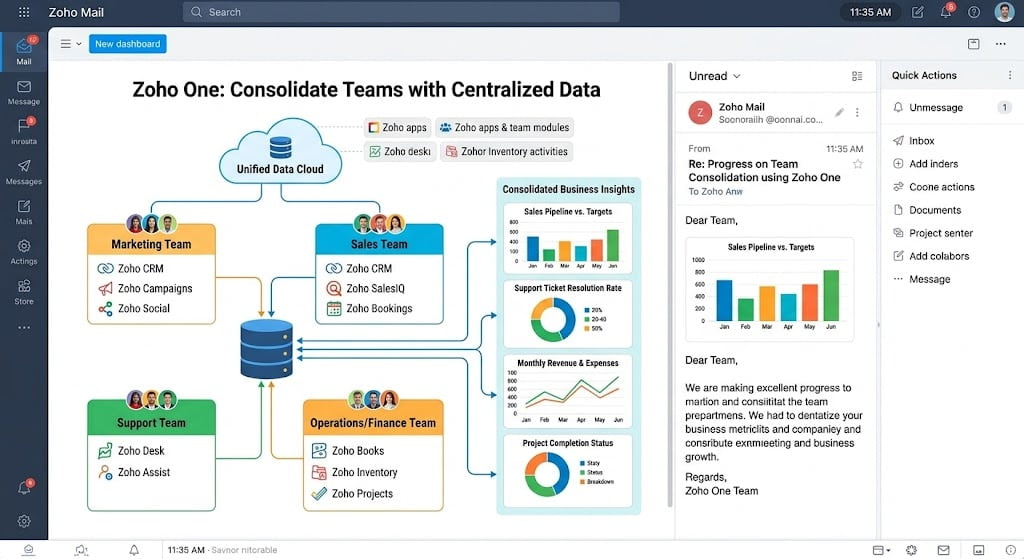
Unifying Teams Through Centralised Apps and Data
Zoho One addresses these challenges directly by consolidating over 45+ integrated applications into a unified, cloud-based ecosystem. Here is how centralised data drives team collaboration:
Seamless Cross-Departmental Communication: When a sales representative closes a deal in Zoho CRM, the finance team instantly sees the updated pipeline in Zoho Books to issue an invoice, while the project delivery team is automatically notified in Zoho Projects.
A 360-Degree View of the Customer: Marketing, sales, and support teams share access to the exact same customer profiles, ensuring consistent branding, personalised interactions, and faster query resolution.
Real-Time Analytics: With centralised data flowing into Zoho Analytics, leadership can build comprehensive dashboards that aggregate metrics from every department, facilitating faster, data-driven decisions.